Our Team
We collaborate to transform the malleable space that law embodies.
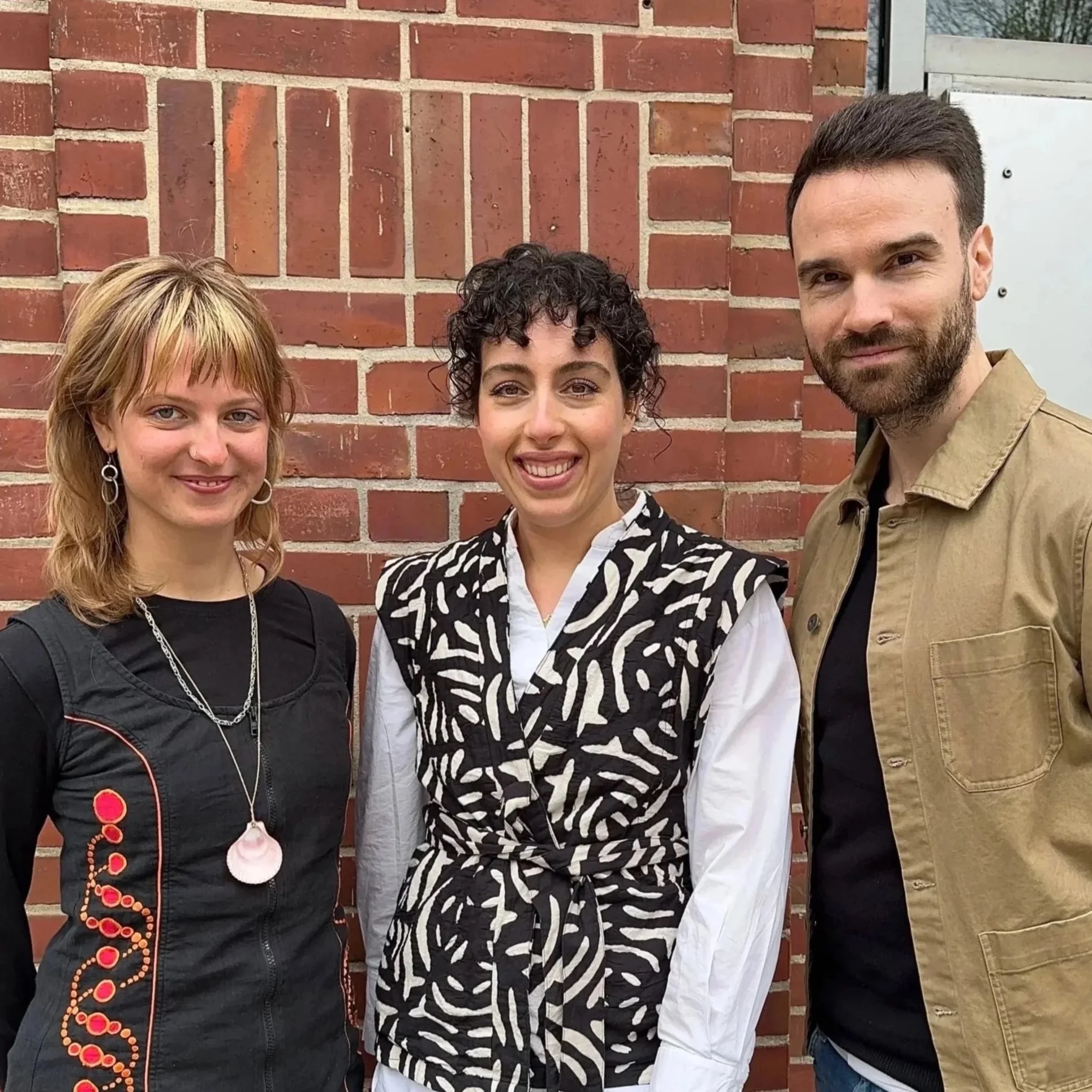
-

Prof. Dr. Jelena Bäumler
Initiator and Scientific Lead of the Leuphana LawLabs
-

Rojda Tosun
Lead of the Leuphana LawLabs
-

Julian Sulimma
Student Assistant
-

Emélie Wahl
Student Assistant
-

Dana Vidgofa
Student Assistant until 2025
Want to learn more about us?
Read our profiles:
-
Prof. Dr. Jelena Bäumler is a Professor of Public Law, European Law, and International Law, with a particular focus on Sustainability Law at Leuphana University Lüneburg. Prof. Dr. Jelena Bäumler initiated the idea for the Law Lab; Her vision to open up new pathways in legal education and practice has become the driving force behind the Law Lab.
In her role as Vice President of the College at Leuphana University, she actively shapes how law is taught and applied. With the ambition of advancing legal studies toward a future-oriented perspective, Prof. Dr. Jelena Bäumler uses the Law Lab to explore the field of transformative legal design at her university. In particular, she views the Law Lab as a lever for sustainable transformation and as a space where new ideas for just and responsible legal frameworks can emerge.
Interview with Prof. Dr. Jelena Bäumler
Why did you decide to launch the Law Lab project?
I had already founded a law clinic in Rostock and believe that experimental approaches to the law are a very important complement to legal studies. With the Law Lab, the elements of legal design and innovation came more to the forefront. How could the law be changed to support the transition to sustainability? What solutions and approaches should we discuss? What can we learn from other disciplines to help us find solutions, and how can we integrate these insights into the formalized processes of legal design? I became increasingly interested not only in the application of law, but also in the question of how law can actively support social change.
Have you had any prior exposure to Legal Design, or was this a completely new field for you?
I had already read about Legal Design here and there and was fascinated by it from the start. The approach of using creative processes to make products, systems, or services more functional and useful—while adopting the users’ perspective—is fundamentally compelling. Why shouldn’t we think about the law in the same way?
The law fulfills important functions in society, but always for a specific audience and, ultimately, for the individual. The law can accompany and guide transformation. It can either be designed in a way that makes it understandable and usable—or in a way that makes it understandable only to legal experts.
What does Legal Design mean to you personally—in three sentences?
To me, Legal Design means asking more questions than usual when shaping the law. It means giving creativity room to breathe. And it means viewing the law not as an abstract work of art, but as a practical tool with functional requirements for the individual.
Is there a specific project or experience at the Law Lab that has particularly influenced or inspired you?
In one of the first seminars, a group tackled the topic of animal-free agriculture. At first, the students felt the field was overwhelming and didn’t know where to start. Then they took on the Animal Welfare Act and amended it in three crucial areas. This would have prohibited the economic use of animals—with few exceptions.
The amendments demonstrated the enormous potential of the law to transform a specific area: the levers it provides and what can happen when you reverse the rule-exception relationship.
What aspect of the Law Lab inspired you to reflect in a way that continues to influence you even beyond the Law Lab?
To this day, I’m impressed by how creatively one can approach even highly technical issues and how much this expands the freedom of thought. This applies far beyond the field of law.
How would you describe the Law Lab in one sentence if you had to explain it to someone who’s never heard of it?
At the Law Lab, we develop new approaches to legal design to support the sustainability transition in a creative and interdisciplinary way.
If you could design a future project at the Law Lab, what would it be about?
My area of expertise is international trade law, and in the coming years I’d like to work even more systematically on prototypes for trade agreements that serve sustainability goals and ensure that international economic activities protect the planet and do not exploit people.
I’d like to explore which instruments are available for this purpose and how they can be translated into legal language in one of the next rounds.
What advice would you like to give to students who are considering participating in the Law Lab?
The Law Lab is a unique space for thinking creatively about the law. Whether you’re a law student looking to step outside the boundaries of lex lata, or a student from another discipline interested in exploring the creative potential of the law, you’re welcome here. Because here, we work together and, in doing so, broaden all of our perspectives.
And finally: Your fun fact!
I find it hard to come across a rule-exception relationship without wondering if it could be turned on its head.
-
The LawLab is led by Rojda Tosun. She studied law and works in the field of legal design. As the founder of PublicLegalDesign, she is shaping the future of law and collaborates with federal ministries, international organizations, and civil society organizations. With the LawLab, she has created a space where legal precision is combined with design methods and where students learn to view law as a lever for social change.
Interview with Rojda:
Why did you decide to participate in the LawLab?
When I launched PublicLegalDesign, my goal was to actively shape the future of law and to establish legal design as a discipline and watch it grow. When I was offered the opportunity to set up and lead the LawLab, I knew immediately: This is the chance to realize this goal in a structured way. After all, the future is created when knowledge is passed on and when many people begin to shape it themselves, thereby making new developments possible.
Have you had any prior exposure to Legal Design, or was this a completely new field for you?
I started early on to translate the law for laypeople and to bring different perspectives into legal processes—for example, for my parents, family members, or friends, but also as the founder of an association for people with immigrant backgrounds, in my interactions with federal ministries and politicians. At the time, I wasn’t aware that these were already elements of Legal Design. It wasn’t until my design training that I found the vocabulary and methodological clarity for it and further refined my practice. As with many developments, this work emerges through action and is refined through practice.
What does Legal Design mean to you personally—in three sentences?
To me, Legal Design means consciously shaping the law. It combines legal precision with systemic thinking, participation, and clarity. And it creates spaces where different disciplines and life realities can be incorporated into legal processes. With a transformative approach, it bridges the gap between law and justice.
Is there a specific project or experience at the Law Lab that has particularly influenced or inspired you?
At the end of each semester, I ask the participants to describe what they understand by “legal design” and how they plan to apply it in their future practice. The progress reflected in their answers is impressive. Many hear the term “legal design” for the first time at the beginning. By the end, they speak confidently about exploring new design spaces, normative responsibility, and the role of law in transformation. Accompanying this intellectual and personal development is a special moment for me every time.
What about the Law Lab prompted you to reflect in ways that continue to influence you even beyond the Law Lab?
The Law Lab has shown me just how great the need is for new forms of legal education. I’ve learned to create spaces where uncertainty can be productive and where different disciplines can come together. And I’ve come to understand even more clearly that legal design is a key competency for a complex world.
How would you describe the Law Lab in one sentence if you had to explain it to someone who’s never heard of it?
The Law Lab shapes law as an integral part of social practice and finds ways to make law accessible and understandable, using it as a tool for transformation.
If you could design a future project at the Law Lab—what would it be about?
In recent years, the Law Lab has developed a sustainable national practice of legal design through close collaboration with civil society organizations and public administrations. Building on this established work, I am increasingly interested in the international dimension. A future project could explore how legal design and regenerative principles work in different institutional contexts—for example, in cooperation with partner universities or organizations abroad. This international perspective would represent a logical next step in the development of our nationally proven approach.
What advice would you give to other students considering participating in the Law Lab?
The hesitation you rightly feel is exactly what we address at the Law Lab. Be ready to shift your perspective—and channel your uncertainty into something productive.
And finally: Your fun fact!
Between my work with PublicLegalDesign and teaching at the Law Lab, I sometimes paint or work at a flower shop—design takes many forms ;-)
-
Julian is a student assistant at the Law Lab and studies Law at Leuphana University. Alongside his studies, he runs a YouTube channel about women's football because he believes that women's football deserves the same attention and recognition as men's football. His commitment shows that questions of justice and visibility are not only theoretical topics but can also be actively promoted beyond the classroom.
Interview with Julian:
Why did you decide to join the Law Lab?
Through the complementary study program, I wanted to look beyond the traditional legal framework. The interdisciplinary approach of the Law Lab convinced me, and I have never regretted my decision.
Had you come across Legal Design before, or was it completely new to you?
No, Legal Design was completely new to me. I already had a lot of experience with law, but I had never seen the connection between law and design before.
What does Legal Design mean to you personally? (3 sentences)
To me, Legal Design means freedom because it allows us to think about legal questions in new ways. It also means connection because it brings together different disciplines and perspectives. At the same time, it stands for innovation because it creates new solutions to existing legal challenges.
Is there a particular project or experience in the Law Lab that had a strong impact on you?
What influenced me the most was realizing that law is not only something we apply, but also something we can shape. The Law Lab course showed me this and changed the way I think about legal issues.
What did the Law Lab make you reflect on that still stays with you today?
The interdisciplinary way of thinking has stayed with me the most. It taught me to look at legal problems from different perspectives and to develop more creative solutions.
How would you describe the Law Lab in one sentence?
The Law Lab is an interdisciplinary space where legal knowledge, design methods, and critical thinking come together to make law more understandable, accessible, and effective.
If you could create a future project in the Law Lab, what would it be about?
I would like to work on redesigning the BAföG application from a user-centered perspective and show how complex administrative processes can become easier to understand and more accessible.
What advice would you give to other students who are thinking about joining the Law Lab?
If you enjoy solving problems and are open to new ways of thinking, you should definitely try the Law Lab. Its methods help you approach challenges in a structured, creative, and interdisciplinary way.
And finally: Your fun fact!
I'm kinda boring. 😅
-
Emélie Wahl is a student assistant at the Law Lab. She is studying for a Bachelor's double degree, majoring in Individual Studies and Law. At the Law Lab, she particularly appreciates the opportunity to experience law from a new, dynamic, and creative perspective. She sees Legal Design as an interface between classical legal scholarship and creative design, where transdisciplinary collaboration plays a central role. For her, the Law Lab is a place where the potential of law for social transformation is explored – openly, collaboratively, and with a focus on the future.
Interview with Emélie:
Why did you decide to participate in the Law Lab?
Law always seemed very monotonous and rigid to me. At the Law Lab, I discovered a new, dynamic, and creative perspective on law, which fascinated me.
Have you had any prior experience with Legal Design, or was it a completely new field for you?
No, it was a completely new world for me, and in some ways, it still is.
What does Legal Design mean to you personally – in three sentences?
I understand legal design as the interface between creative design and traditional law. A key component is the transdisciplinary collaboration between different disciplines and civil society to jointly effect social transformation.
Is there a particular project or experience in the Law Lab that has particularly shaped or inspired you?
I always enjoyed it very much when guests were invited and talked about their respective projects. It's so inspiring to see what already exists and, consequently, what our Law Lab could become.
What prompted you to reflect in the Law Lab that continues to resonate with you beyond the Law Lab?
I learned that law can be used as a lever for social transformation.
How would you describe the Law Lab in one sentence if you had to explain it to someone who has never heard of it?
The Law Lab is a project at Leuphana University Lüneburg that explores the potential of law for social transformation.
If you could design a future project in the Law Lab, what would it be about?
I would like to help design a project that strengthens democracy, promotes dialogue, and counteracts the rise of right-wing extremism.
What advice would you give to other students considering participating in the Law Lab?
Try it out and bring your own ideas and projects!
And finally: Your fun fact:
I love hula hoops :)